Vina Carić: Island Wine, a Gift from G*d
Sep 3 | Written by Daniel Lukin-Beck
Every summer, we travel by various modes of boat to the beautiful island of Hvar off the Dalmatian coast. Commonly referred to as the "sunniest place in Europe", the island experiences an average of 2,800 hours of sunshine a year, where it shines down on vineyards towering over the crystal-clear, turquoise Adriatic sea.
Our route has always brought us to the small fishing village of Sveta Nedelja, where our core winery partner - Zlatan Otok – is based.
But this trip to the island took us on a different route. In continuing to explore adding more Dalmatian whites to the portfolio (we can't seem to have enough!), we were pointed in the direction of another producer on the island: Vina Carić (Tzar-itch)
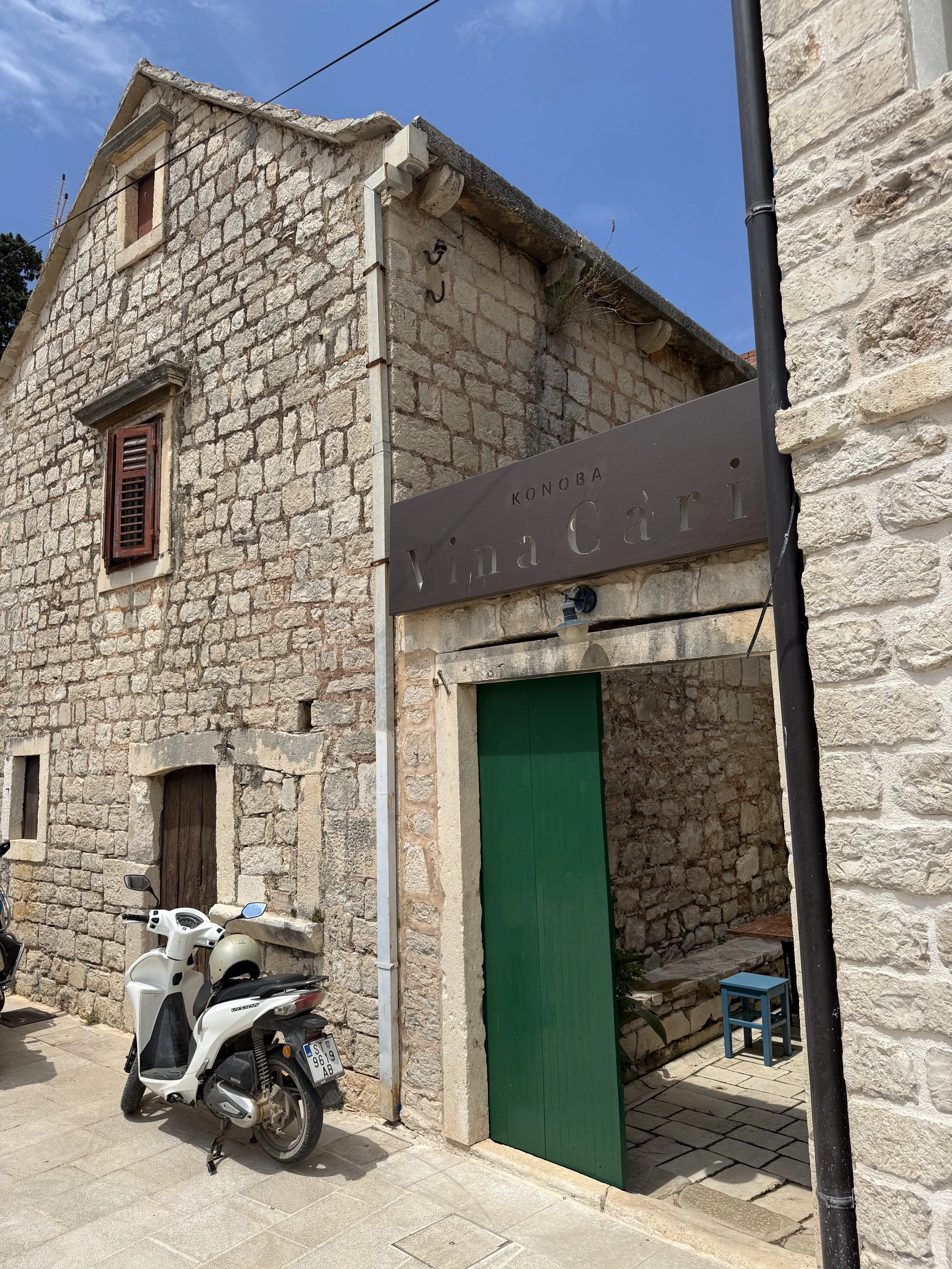
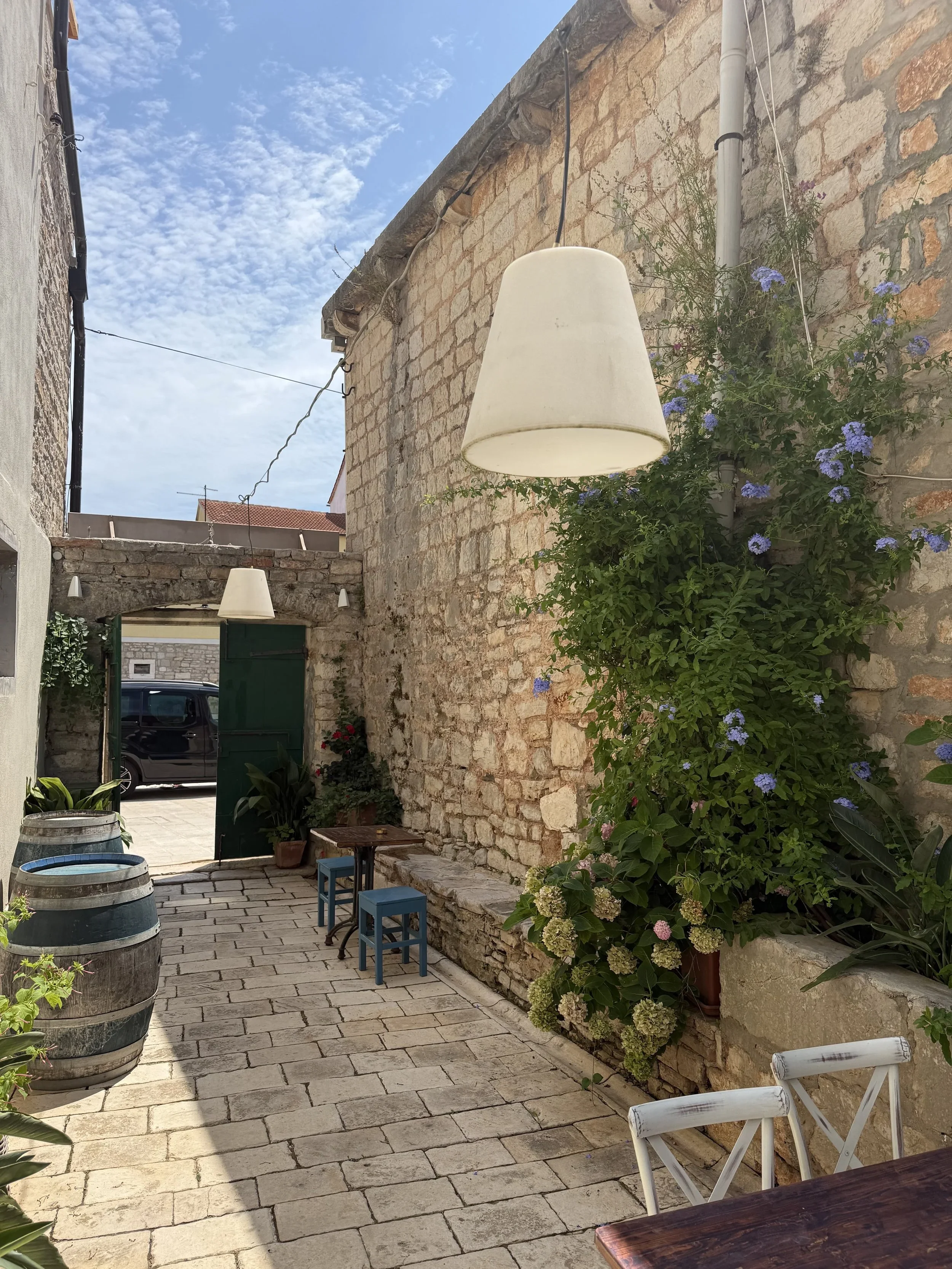
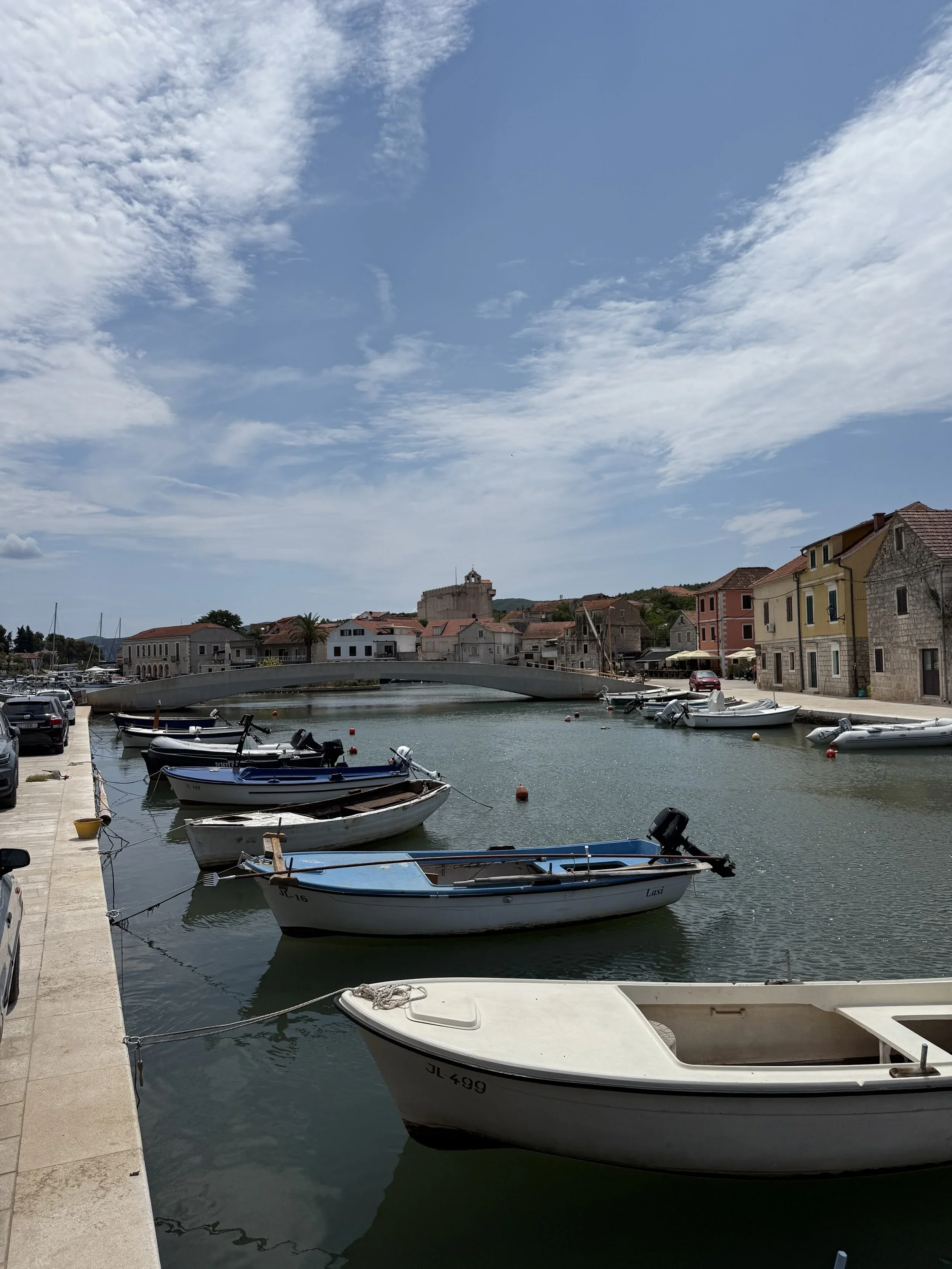
Our friend and partner, Tomislav Voštinić (winemaker/owner @ VK), whose perpetual laid-back demeanor grants him honorary Dalmatian status, loves the Carić wines and suggested we connect with the winery. During one of the many heat waves Europe saw this summer, we traveled through the island to the little village of Vrboska, where Carić has a small konoba (tavern) and tasting room off the canal that runs through town.
Walking through a small arch of white stones bursting with botanicals, we were greeted by the family and owners - Ivo, and his wife, Ivana Carić, along with their nephew, Ljubo, who is now leading the winemaking.
Ivo is a brawny and broad-shouldered Dalmatian with a warm spirit but doesn’t speak much English. Ivana is soft-spoken, but takes the lead. She is a remarkable woman who manages almost everything, from the direction of the estate's production and export to the tasting room, as well as overseeing the local winemakers’ association of the island of Hvar.
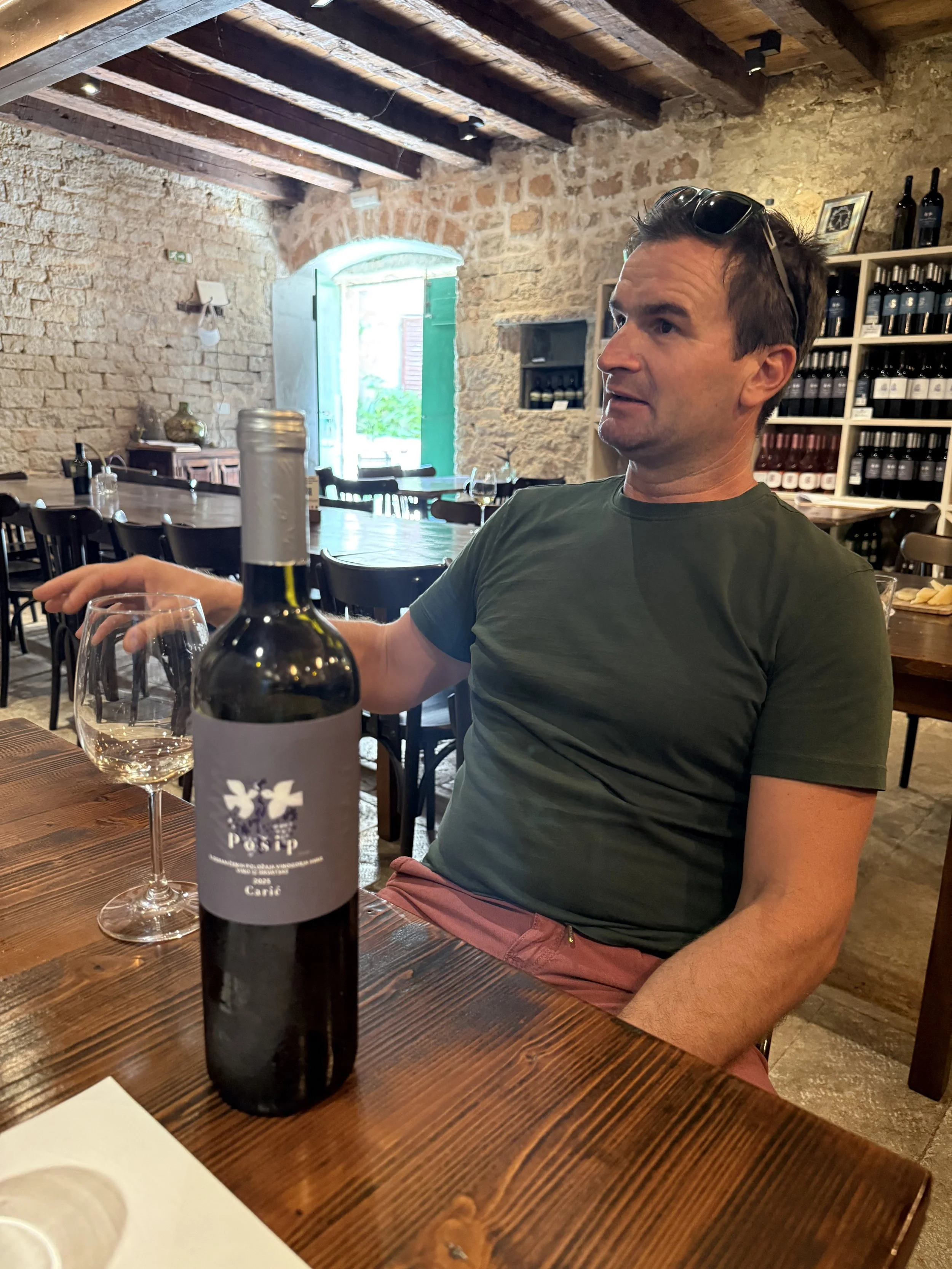
The Carić family winery focuses on the indigenous varietals of the island, utilizing site-specific expressions to hone in on the distinct microclimates and the rich history of viticulture on Hvar.
“We try to preserve the identity of the grape”, Ljubo shares.
The whites, for example, all come from areas stretching from Vrboska to the Stari Grad Plain, on the northern and central part of the island. The Stari Grad Plain is an established UNESCO Heritage site due to the ancient stone walls still retained from the ancient Greeks in 400 BC when they planted grapes. With less steepness and more sandy and red clay soil, the whites grown here show great freshness, balanced with deep fruit character, and tremendous lip-smacking salinity.
The reds, on the other hand, are grown on the steep and coastal vineyard sites of Ivan Dolac, reaching up to 400m in elevation. Consisting mostly of Plavac Mali vines grown on poor, rocky limestone soil with direct exposure to the sun and the coastal winds, these sites produce wines with deep concentration and power. They also grow a small amount of the rare and indigenous Hvar grape, Darnekuša, which exclusively grows on high-elevation coastal plots and produces shockingly light and delicate reds amidst the island’s intense conditions.
Their standout wine for us was their Bogdanuša (boeg-dah-noosh-ah), which tastes like Croatia’s sunny island version of a Muscadet.
Directly translated to “Gift from G*d”, this rare grape is indigenous to the island and exclusively found on Hvar. We were excited to wash down a bottle at lunch with local grilled lignje (squid), and we weren’t upset at all to receive an encore performance for dinner when we found it on the wine list in old town Hvar. I mean, when G*d gives you such a gift, how do you refuse?!
Ljubo shared that the 2025 Bogdanuša vintage is one of the best they’ve had over the past few years. They achieve the balance by harvesting in 3 different passes on the island, capturing balanced fruit and acidity. For Dalmatian whites, due to the lack of cool evening temperatures, it is common to exhibit lower or more neutral acidity in the wines; However, the Bogdanuša varietal already has great natural acidity, preserving a level of freshness.
“Their standout wine for us was their Bogdanuša (boeg-dah-noosh-ah), which tastes like Croatia’s sunny island version of a Muscadet.
Directly translated to “Gift from G*d”, this rare grape is indigenous to the island and exclusively found on Hvar.”
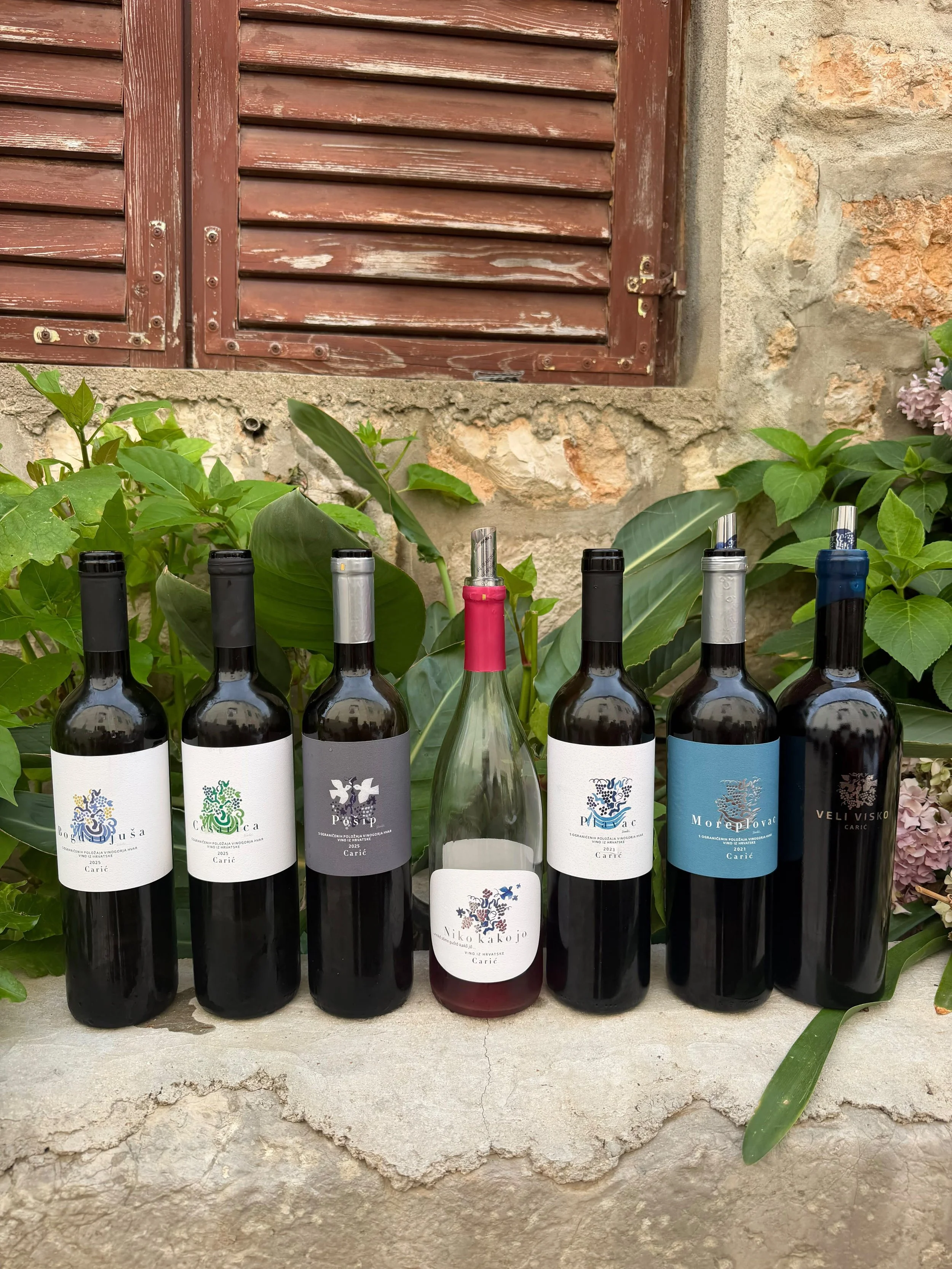
We also brought in the family’s Pošip, which offers beautiful golden fruit and depth from its sunny island exposure. We just can’t get enough of that grape, and it happens to be a ridiculous value for Pošip! And for the first time, we get a taste of the exciting high-elevation Darnekuša grape, a surprisingly delicate island red blended with direct-press Plavac Mali that makes a deliciously gluggable Dalmatian red they call ‘Niko Kako Jo’ (Nee-koh / Kah-koh / Yo), translated to “Enjoy it like I do”. (There’s a great story behind the meaning and alternative translations you can find on the tech sheet.)
We have always loved the salty and sun-kissed wines of Hvar, but we were truly wowed by the Carić family’s lineup. Wines that dive deep into the dramatic terroir and immense history to tell the winemaking story of this little sunny island on the Dalmatian coast.